Industrial networks and fieldbus.
Fibre backbones, industrial Ethernet and fieldbus sized for a production hall.
What a production hall does to cable
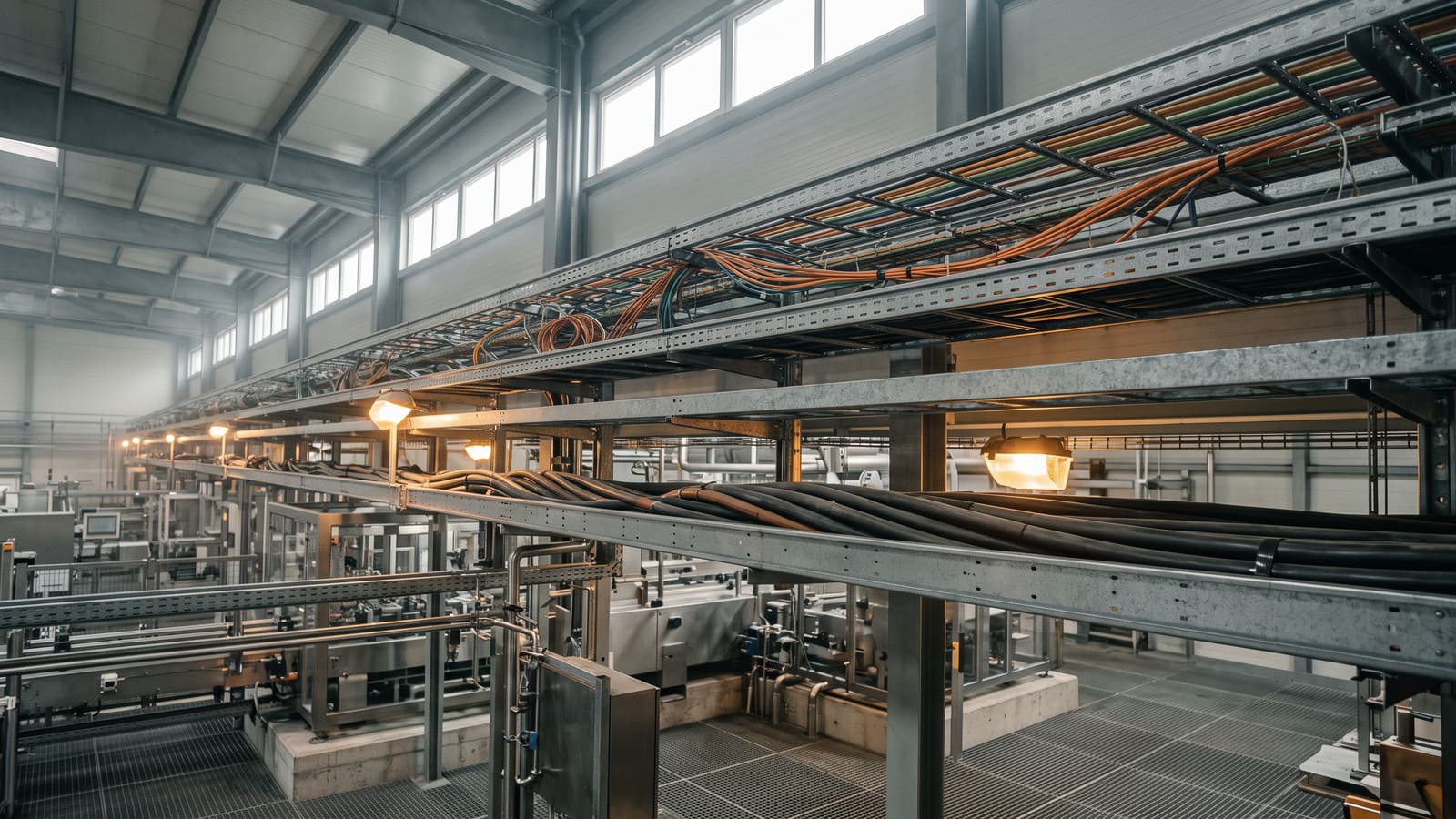
Dust on every surface, vibration off the line, damp left by washdowns and forklift traffic in the aisles. An office-grade installation survives that for a while. Then it starts failing intermittently, and finding the fault eventually takes longer than the original installation did.
What we install
Fibre backbones, industrial Ethernet, PROFINET and PROFIBUS segments, switch cabinets and patching. Data routes are kept away from power and well clear of drive cabling. In practice that usually means one more tray than the drawing allowed for.
Measured and recorded
Every link is certified and the results come with the handover pack. They are worth keeping. A few years on they are the only way to tell whether the network changed or something else did.
HOW A PROJECT RUNS
- 01
SURVEY
We walk the plant and look at what is there and what is missing. Old drawings rarely match reality, so we measure for ourselves. You hear the findings before anything is promised.
- 02
SCHEDULE
The date and the commissioning window are agreed before work starts. Usually they hang off the shutdown, when the hall is full of other contractors and every hoist is booked. Resourcing is best locked down well in advance.
- 03
INSTALL
Drawn before it is pulled, labelled before it is live. The site is cleared daily. In most plants that is a fire safety matter as much as a tidiness one.
- 04
COMMISSION
Loop checks, dry runs and running under load. The handover briefing is given by whoever wired it. Test records follow by the end of the project at the latest.
The questions that usually come first.
Do you certify the links?
Yes. Every link is measured and the record forms part of the handover pack.
Fibre or copper?
Fibre for backbones and anywhere there are drives, welding or long runs. Industrial copper for the last stretch. Sizing is done segment by segment.
Will the network survive production conditions?
That is the starting point of the design. Dust, damp, vibration off the line and forklift traffic decide the ingress ratings and the routes. In practice data runs on a different tray from power, and that usually means one more tray than the original drawing allowed.
Can you extend an existing network?
Yes. We look at what is there and what condition it is in first, and you hear the findings before an extension is agreed.
Closely related